
Successfully Concluded | 5-Day Immersive Training, Master the Core Techniques of Authentic PNF Rehabilitation!12
Source: News Center
2026-05-14

The PNF (Proprioceptive Neuromuscular Facilitation) Level 1 International Certification Course, hosted by Jianheng Academy and sponsored by professional rehabilitation tool brand Theratools, was successfully held in Zhengzhou from May 9 to 13. Under the guidance of Mentor Yin Zhengxuan, nearly 20 rehabilitation professionals embarked on a transformative journey — moving from basic familiarity with PNF to confident clinical application.
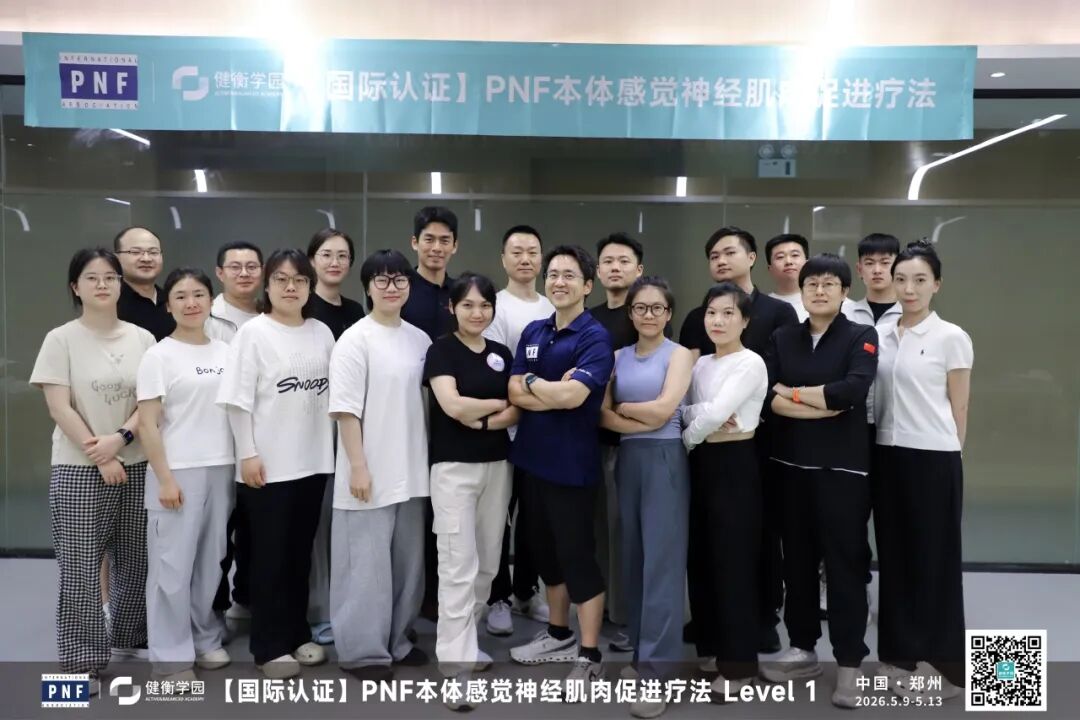
As a complete and classic rehabilitation therapy system, PNF (Proprioceptive Neuromuscular Facilitation) has remained one of the most influential core techniques in the field of physical therapy since it was developed by Dr. Kabat in the 1940s.
This Level 1 course is carefully designed to help participants systematically learn the fundamental philosophy, neurophysiological foundations, core manual techniques and clinical reasoning skills of PNF.
Course Review | Immersive Learning From Theory to Practice
Over the 5-day course, the lead instructor was IPNFA®-certified Mentor Yin Zhengxuan (PT, MSc). Drawing on more than 20 years of clinical and teaching experience, he guided participants through the complete PNF learning journey step by step:
Day 1: Start with the history, core philosophy and basic procedures of PNF. Participants gained an initial understanding of the spiral-diagonal pattern principle and the whole-part relationship.
Day 2: Adopting the WHO ICF assessment framework, dive into practical training for upper extremity patterns (flexion-abduction-external rotation) and techniques (agonist reversals / isotonic combinations).
Day 3: Focus on mat activities and lower extremity patterns, learning key facilitation techniques such as dynamic reversals.
Day 4: Cover sit-to-stand movements and fundamental gait training, including biomechanical analysis and stabilising reversal techniques.
Day 5: Integrate balance, gait and postural control, and complete comprehensive practice in supine and sitting positions, laying a solid foundation for Level 2 training.
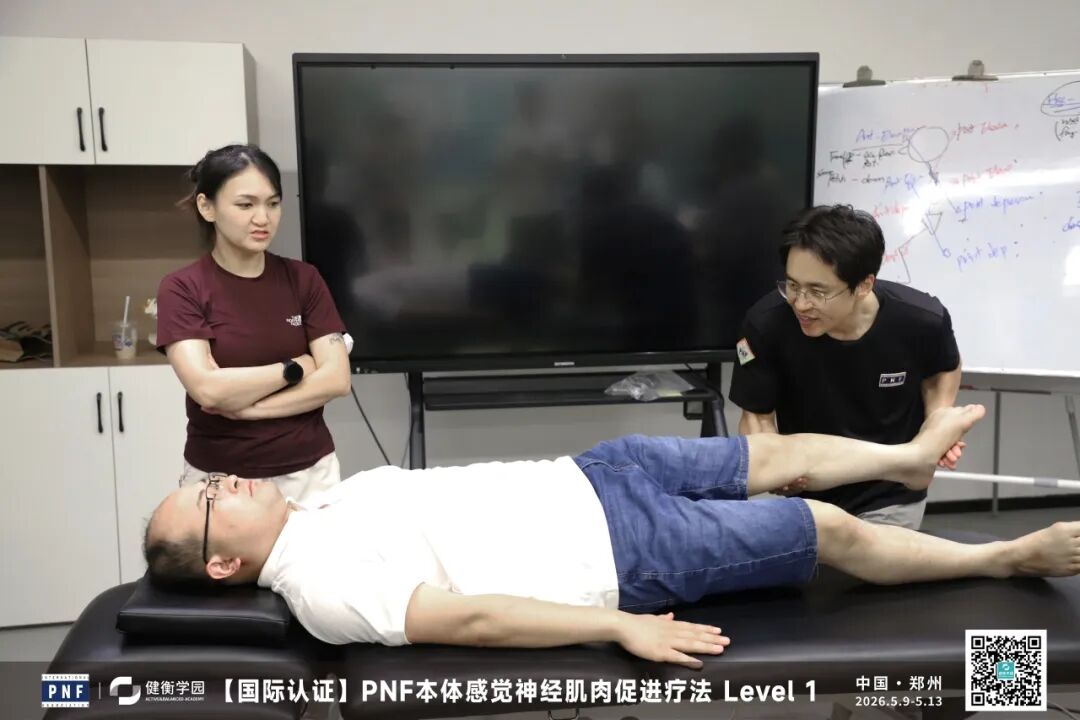
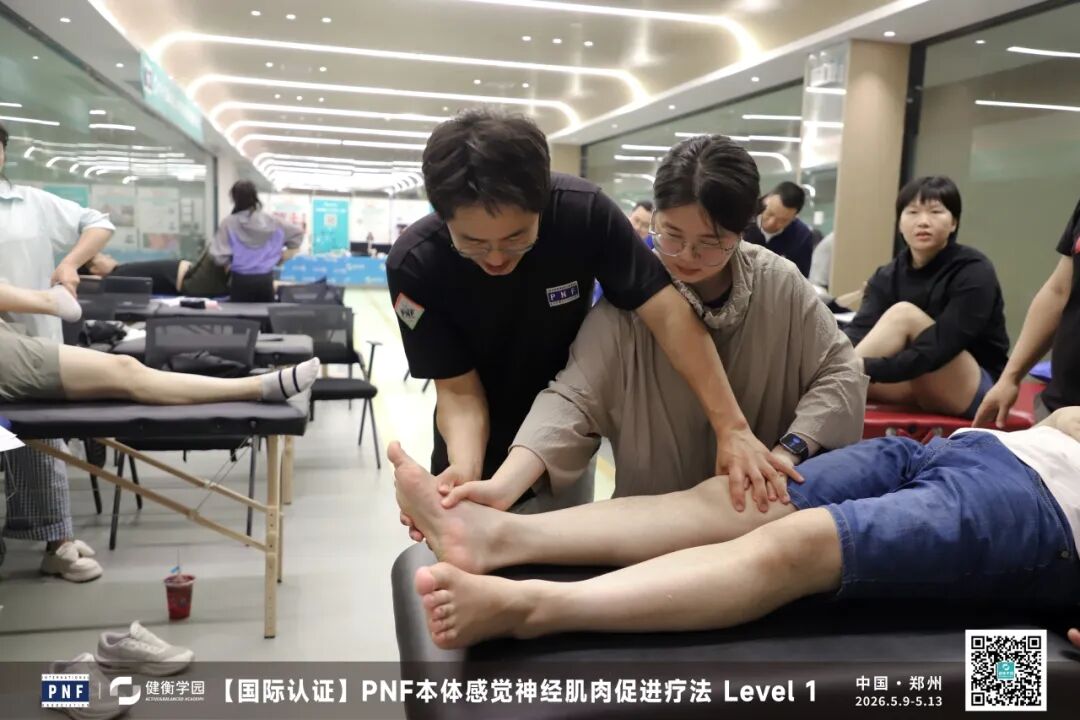
The whole course emphasises active participation and clinical reasoning. Under the instructor’s guidance, through patient demonstrations, case discussions, group practical drills and other forms of training, participants translated abstract proprioceptive principles into tangible clinical skills.
Course Highlight: Not Only Techniques, But Also the Exchange of Minds
The highlights of this course include not only systematic training aligned with IPNFA® standards, but also its three-in-one teaching model combining theory, hands-on practice and clinical case studies, enabling immersive participation for every learner:
International Standardised Teaching
The entire curriculum follows the official IPNFA® framework, aligning strictly with international certification requirements from foundational principles to clinical applications, ensuring participants learn authentic, standardised PNF techniques.
Hands-on Refinement with Individual Guidance
Drawing on over 20 years of clinical experience, Instructor Yin shares his expertise fully and corrects each participant’s manual techniques on site. From passive guidance and resisted initiation to rhythmic initiation and stabilising reversal techniques, participants master how to regulate optimal resistance.
Clinical Discussions Based on Real CasesMultiple real clinical scenarios, including shoulder pain, stroke rehabilitation and knee instability, are integrated into the training. Participants work in groups to develop treatment plans, which are then reviewed and refined by the instructor. These discussions facilitate the practical application of concepts such as irradiation & reinforcement and timing principles.
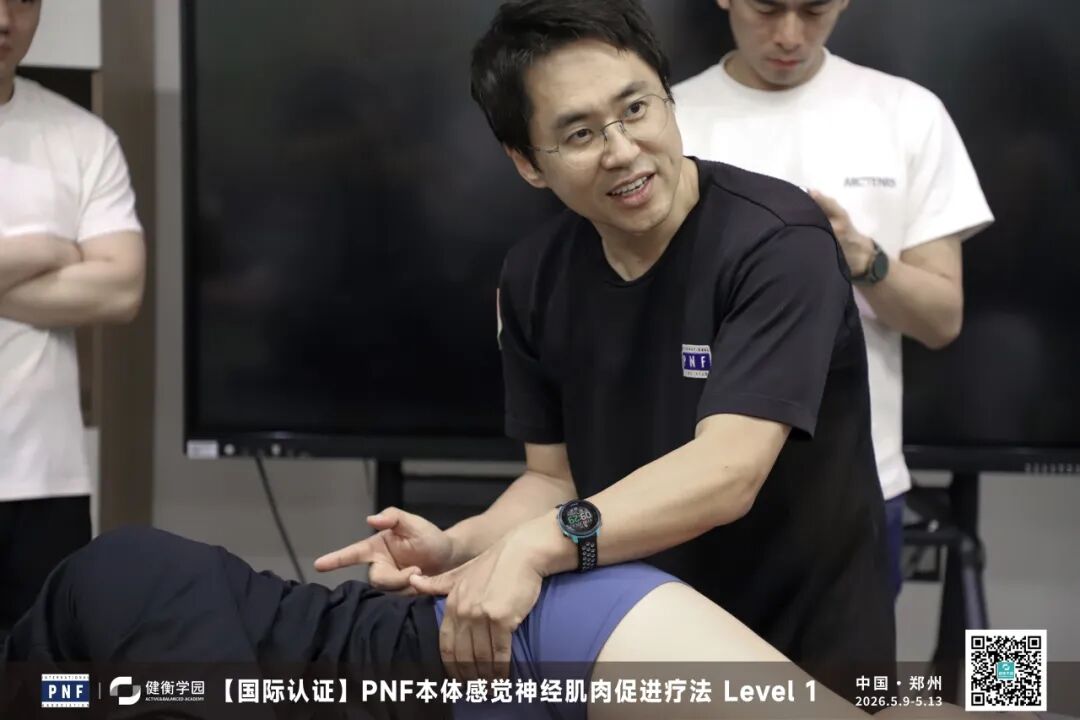
Participant Outcomes
PNF has become a fundamental tool recognised by the global rehabilitation community not only for its systematic techniques, but also for its profound functional philosophy: start with what the patient is capable of doing, focus on activities of daily living as treatment goals, and remodel motor output via proprioceptive input.
During this course, participants systematically mastered the following:
Core techniques: rhythmic initiation, dynamic reversal, contract-relax, repeated stretching, etc.
Neurophysiological mechanisms: reciprocal inhibition, summation effects, and clinical applications of the stretch reflex.
Functional training: mat rolling, sit-to-stand transfers, respiratory facilitation, gait training, and more.
Clinical reasoning framework: integrating PNF into individualised treatment plans based on the ICF model.
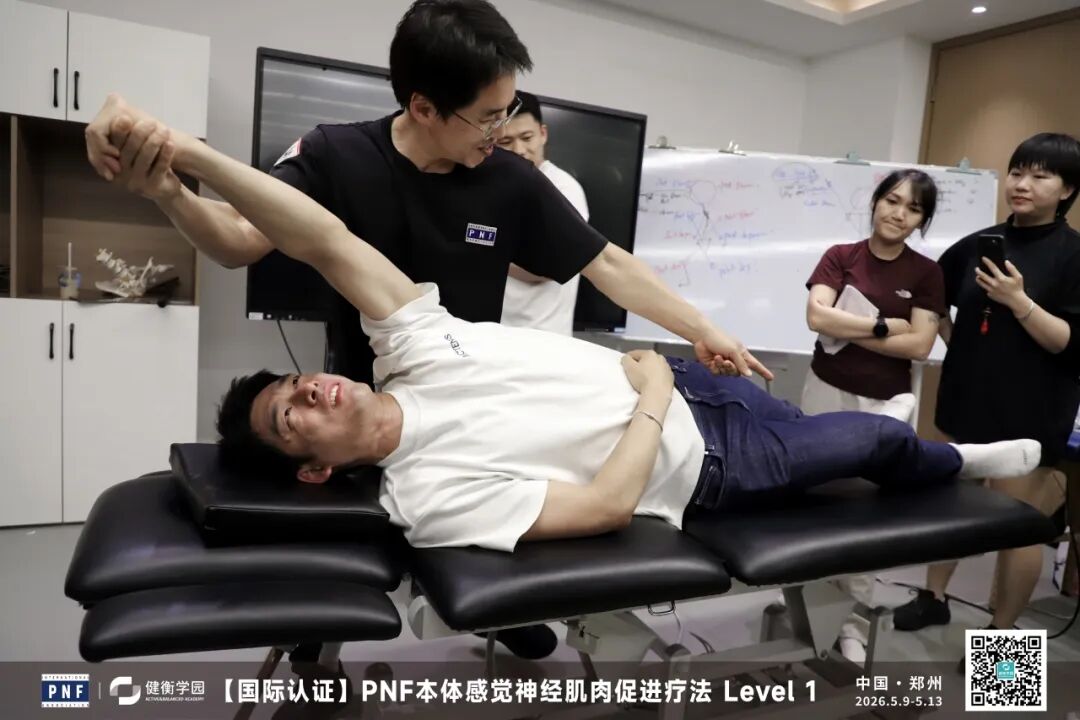
Participant Feedback
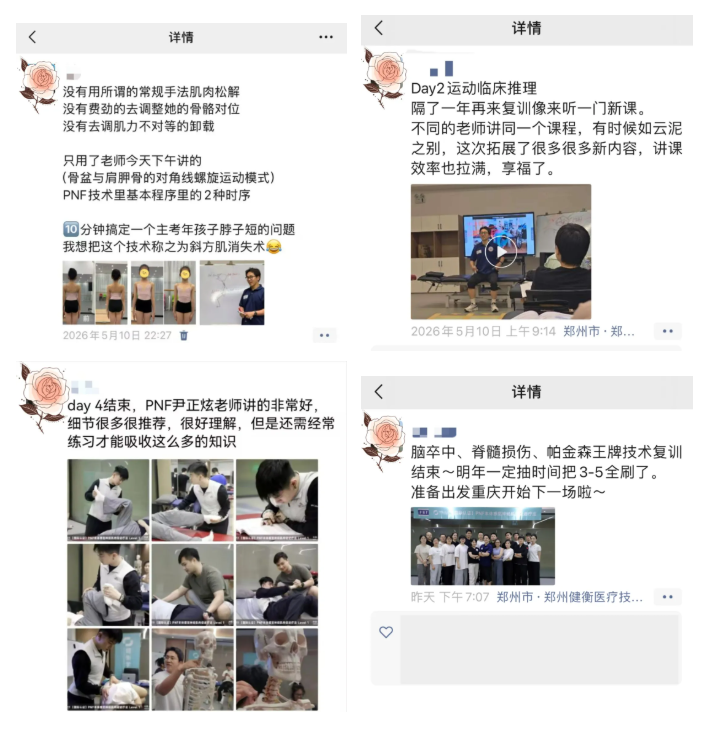
Level 2 Coming Soon
With the successful completion of the Level 1 course, participants are set to embark on a new phase of their advanced PNF training journey. The second module, PNF Level 2, will be held in Zhengzhou from July 22 to 26, 2026.
Level 2 will focus on:
ICF assessment and clinical reasoning for complex cases
Advanced trunk and lower extremity patterns (chopping, lifting, bilateral lower extremity patterns)
Functional integration training including gait facilitation, timing reinforcement, and supine-to-standing progression
Paired hands-on management of real clinical cases, with one-on-one guidance and feedback from the instructor
This course is available as a combined Level 1 + Level 2 package. Participants who have completed Level 1 will proceed to in-depth Level 2 learning with a solid foundation and enhanced clinical goals.
Closing Remarks
Over these five days of study, we witnessed participants grow from having only a superficial understanding of PNF to being able to independently develop basic treatment plans. We also saw their understanding of the holistic rehabilitation philosophy evolve from vague to clear.
The journey of rehabilitation is never achieved overnight. PNF is not a one-size-fits-all technique that works universally once learned. It requires consistent practice, reflection and refinement guided by clinical reasoning.
We are deeply grateful to Mentor Yin Zhengxuan for sharing his knowledge generously, and to every participant for their dedicated engagement and sharing.
We look forward to reuniting in the PNF Level 2 classroom in Zhengzhou this July, exploring the advanced applications of PNF together, so that more patients can benefit from evidence-based, standardised PNF therapy!