
Resolve Chronic Pain at Its Source in 3 Days! DNS Clinical A Course Zhengzhou Grand Finale12
Source: News Center
2026-03-14

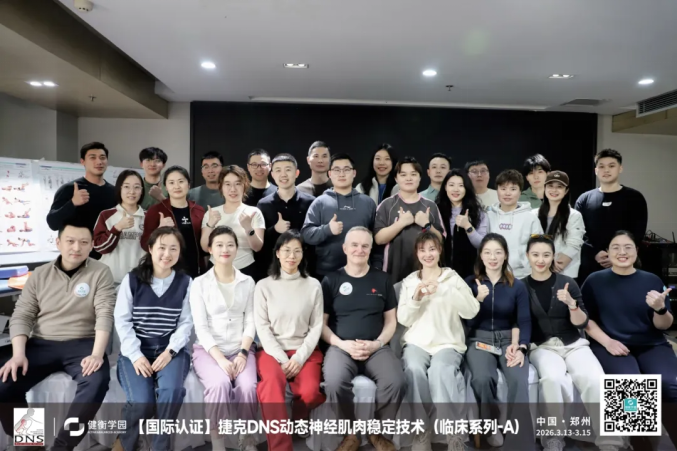
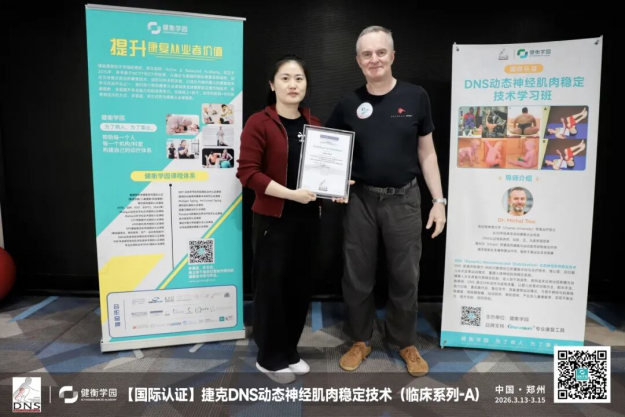
March 13–15, 2026, the DNS Dynamic Neuromuscular Stabilization Clinical Level A Course hosted by Jianheng Academy concluded successfully in Zhengzhou.
Rehabilitation physicians, physical therapists, sports coaches and related practitioners from all over the country gathered here. Under the guidance of Dr. Michal Truc, a DNS-certified instructor from the Prague School in the Czech Republic, they completed this three-day internationally certified course with intensive training, tight schedules and high practical value.
PART.01
Course Review
DNS (Dynamic Neuromuscular Stabilization) was developed by Professor Pavel Kolář of the Rehabilitation School in Prague, Czech Republic.
This course revolves around the core principle of DNS: the human body’s optimal neuromuscular stabilization mechanism already exists within the developmental movements of infants. Poor posture, repetitive injuries and impaired neural control cause adults to lose this innate stabilization pattern, resulting in chronic pain and motor dysfunction.
The breakthrough of DNS is that it avoids symptomatic treatment. Instead, by replicating the developmental postures of healthy infants (such as rolling, crawling, and prone weight-bearing), it reactivates the Integrated Spinal Stabilization System (ISSS), regulates Intra-Abdominal Pressure (IAP), achieves joint centration and stable limb support, and rebuilds pain-free, efficient movement patterns at the neuromuscular control level.
(1) Course Highlights
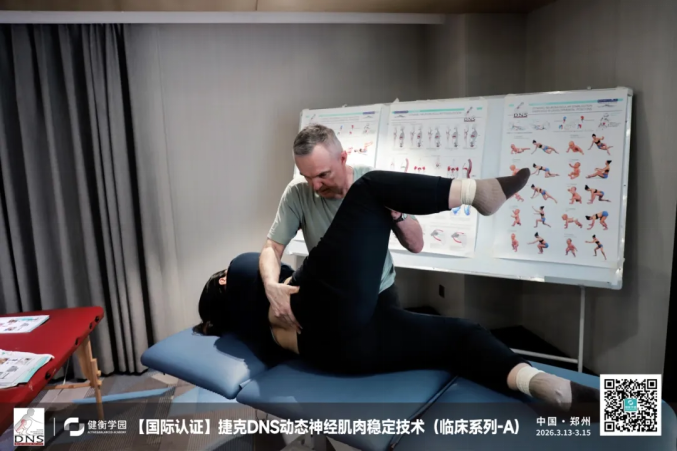
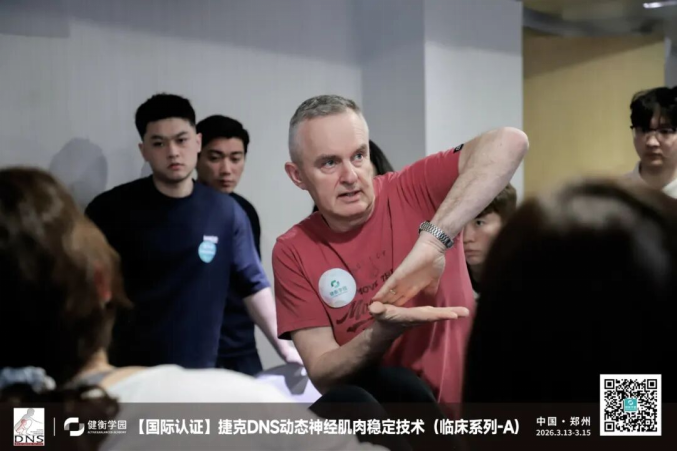
Small-group Teaching & Precise Guidance: Strictly limited class size to ensure every participant receives personalized feedback and hands-on correction from the instructor.
Three-in-One Learning: Theory, Practical Training & Case Studies. Intensive practical sessions and real clinical case reviews every afternoon help participants master the techniques and apply them confidently.
Globally Recognized International Certification: Participants receive official DNS international certification upon course completion, adding authoritative credentials to their professional development.
Interdisciplinary Integration & Broadened Vision: The curriculum integrates neuroscience, developmental kinesiology and rehabilitation medicine, breaking disciplinary barriers and applicable to both clinical practice and sports scenarios.
(2) Course Content
This 3-day Clinical Level A course progresses systematically from theory to practical training, helping participants build a complete DNS knowledge framework:
Day 1 Foundation Building: Core Principles & Assessment
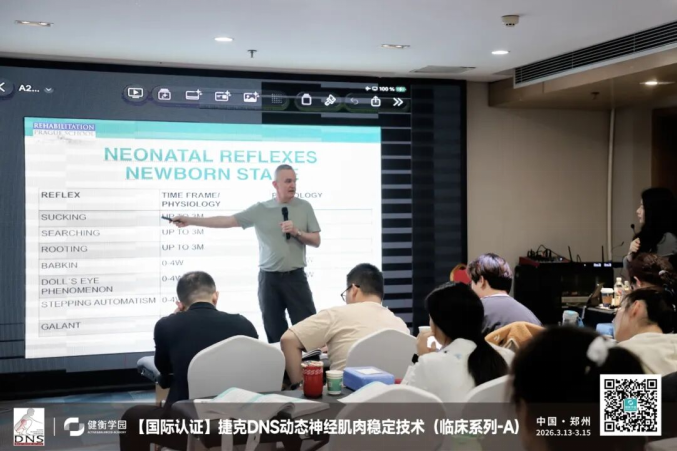
Core DNS Theories: Learn about the academic background of the Prague School and Professor Pavel Kolář, and master three core principles: levels of motor control, dynamic stabilization via intra-abdominal pressure, and joint centration.
Posture and Respiratory Regulation: Explore the three key functions of the diaphragm — respiration, stabilization, and intra-abdominal pressure regulation — and analyze how the interaction between posture and breathing affects clinical practice.
Practical Assessment (Part 1): Learn basic assessment methods including seated diaphragm function tests and intra-abdominal pressure tests, with hands-on practice on site.
Day 2 Clinical Application: Manual Techniques & Treatment
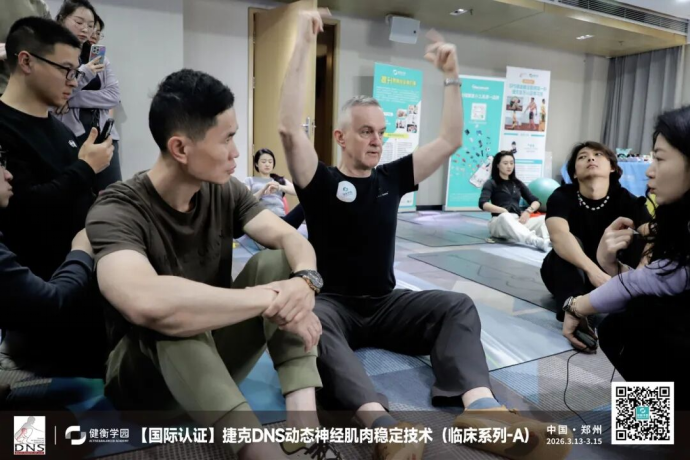
Practical Assessment (Part 2): Master advanced assessment tests including supine arm elevation and prone head/neck extension assessments.
DNS Therapeutic Techniques: Learn soft tissue release techniques, respiratory and stability training, and resisted active movement training in multiple positions (supine / sitting / prone).
Clinical Case Analysis: Group practical training based on real clinical cases, translating theoretical knowledge into clinical skills under the guidance of the instructor.
Day 3 Advanced Integration: Application & Certification
Advanced DNS Assessment: Learn advanced assessment techniques such as quadruped backward rocking, bear test, and squat test.
Integrated Clinical Practice: Explore flow sequences and verticalization training of DNS for paediatric and adult rehabilitation, followed by course review and Q&A sessions.
Practical Assessment & Certification: Participants complete on-site practical evaluations and receive the official DNS Clinical Level A Course certificate of attendance.
(3) Participant Feedback
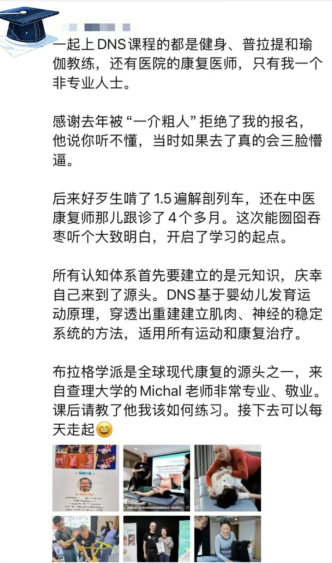
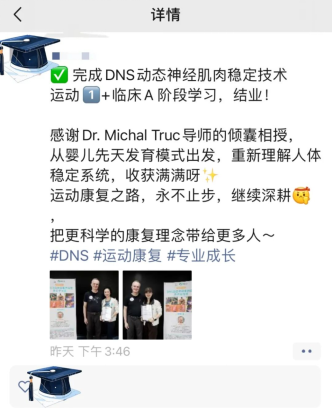
"I used to struggle to identify the root cause of chronic pain. This DNS course made me realize the problem stems from the loss of innate infantile movement patterns! The instructor’s hands-on guidance was incredibly detailed, and I can apply these techniques directly to my patients right away."
"DNS does not just focus on local pain points. Instead, it addresses breathing, posture and overall movement patterns, resolving many of my clinical puzzles!"
"Small-group teaching is such a great experience! I have taken other courses with large class sizes before, where there was hardly any chance to ask questions. Dr. Michal Truc corrected each movement individually this time, enabling me to make remarkable progress quickly."
 |  |
 |  |
 |  |
 |
(4) Course Photos
PART.02
Quick Overview of Technical Principles: What Problems Does DNS Address?
What makes DNS unique is its developmental perspective. As healthy infants grow, the central nervous system naturally develops an optimal posture-motor control program. Deep spinal stabilizer muscles are pre-activated before limb movement (the feedforward mechanism), and intra-abdominal pressure (IAP) is generated to provide dynamic spinal stability.
In adults, this innate program becomes disrupted or inhibited due to injury, chronic pain, poor posture, and faulty movement patterns. Through specific positional activation (e.g., prone positioning, three-point weight bearing, bear crawling), DNS re-educates the brain and restores this ideal neuromuscular control pattern, achieving the following outcomes:
*Reconstruction of the integrated spinal stabilization system (ISSS)
*Joint centration (movement of joints within their optimal biomechanical alignment)
*Efficient weight-bearing and force generation of the extremities

PART.03
Upcoming Courses
DNS is not a fixed set of exercise routines, but a holistic therapeutic strategy based on neurodevelopmental science and motor control theory. It teaches us not simply which exercises to perform, but why we use a specific posture and activate specific muscles at a given moment. When the brain receives proper stimulation, optimal movement patterns emerge naturally — this is the ultimate goal of rehabilitation.
Thank you to Dr. Michal Truc for his generous and thorough teaching, and to every participant for their full engagement. Jianheng Academy will continue to introduce world-leading rehabilitation courses to support your professional development.
See you at the next DNS course!